What is the Difference Between Factoring and a Loan?
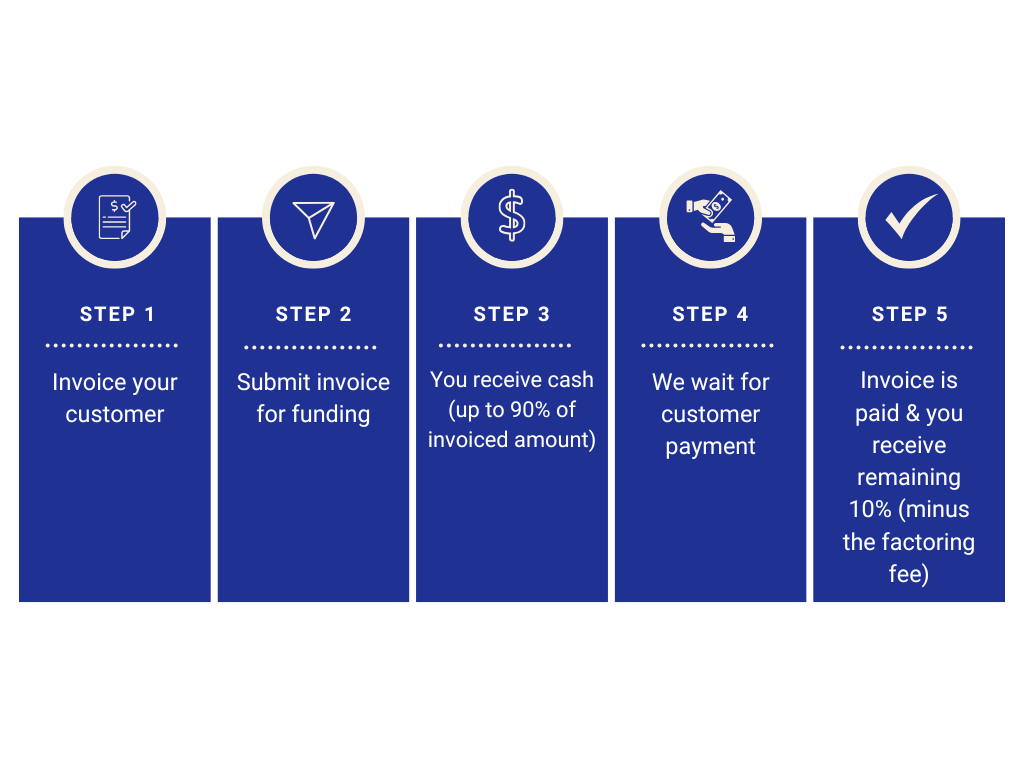
The main difference between factoring and a loan is that factoring is the sale of your unpaid invoices to a third party for immediate cash. On the other hand, a loan is borrowed money that must be repaid with interest over time. Factoring relies on your customers’ creditworthiness, not your business’s debt capacity.
Factoring vs. Loans
| Factoring | Loan |
|---|---|
| You sell unpaid invoices to a factoring company. | You borrow money from a bank or lender. |
| No debt is created. | Creates debt on your balance sheet. |
| Approval based on your customers’ payment history. | Approval based on your business’s credit and financials. |
| Cash in as little as 24 hours. | Can take days or weeks for approval and funding. |
| Flexible – funding grows with your sales. | Fixed amount, regardless of sales volume. |
When to Use Invoice Factoring:
- Cover payroll or operating expenses when customers are slow to pay.
- Improve cash flow without adding new debt.
- Great for industries like security, staffing, and other business-to-business services.
When to Use a Loan:
- Cover large, one-time purchases like equipment or real estate.
- When your business has strong credit history and collateral.
- Best if you don’t have ongoing cash flow gaps.
Which Is Right for Your Business?
If your business struggles with long payment cycles, factoring provides fast working capital without taking on debt. If you need a lump sum for growth or expansion and can comfortably manage repayment, a loan may be a better fit.
How Do I Choose a Factoring Company?
Not all factoring companies work the same way, so it’s important to find a partner that aligns with your business needs. When comparing options, look for:
- Flexibility – Does the company allow you to factor only the invoices you want, or do they require you to factor everything?
- Contract Terms – Some factoring providers lock you into long-term contracts with monthly minimums. This can be restrictive, especially if your cash flow needs change.
- Transparency – Make sure fees, advance rates, and repayment terms are clear up front.
- Industry Experience – Choose a factoring partner that understands your business model and customer base.
At AFS, we make factoring simple and business-friendly:
- No minimums – Factor only when you need to.
- No long-term contracts – Stay in control of your funding.
- Flexible options – Tailored programs designed to grow with your business.
By working with a factoring company that puts your needs first, you gain the cash flow support you need without sacrificing flexibility or control.
Ready to unlock cash flow and get back to business?
Let’s talk about how AFS can help.